Food & safety
Quick & Easy Guide: How To Get A 5 Star Food Hygiene Rating


When deciding where to eat, consumers consider many things, but one of the most influential is your business’s food hygiene rating. The latest research from the Food Standards Agency, released in September 2026, shows that customers often choose venues with higher scores, meaning your rating directly affects reputation, customer trust, and repeat visits.
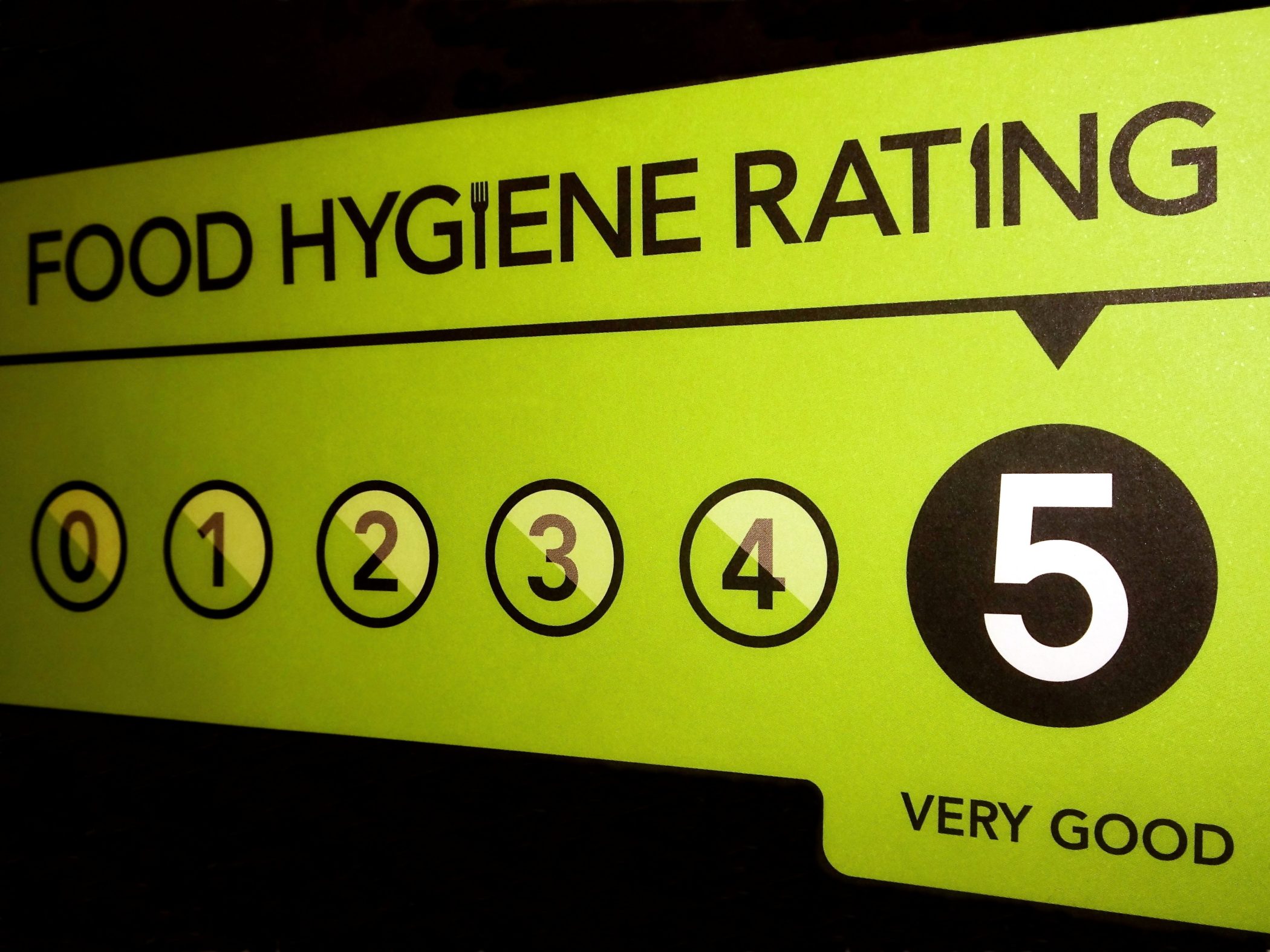
The Food Hygiene Rating Scheme (FHRS, run in conjunction with local authorities, scores businesses on hygiene standards from 0 to a 5 star food hygiene rating):
Aiming for the top score of a 5 star food hygiene rating signals that your business maintains excellent food hygiene practices. And these food hygiene rating statistics, researched by the FSA, show that your rating really does influence customer behaviour:
Over 91% of UK consumers are aware of the Food Hygiene Rating Scheme.
52% of consumers state that 4 is their minimum acceptable hygiene score when deciding where to eat or purchase food.
28% of consumers actively avoid businesses that fail to display a sticker or score poorly.
The following guide explains how the rating works, what inspectors look for and how to reach that ‘very good’ standard.
Inspections are carried out by Environmental Health Officers (EHOs) from your local authority. Visits are unannounced, so you must always be ready.
Frequency depends on the type of business and your past performance. High-risk operations may be inspected every six months, while lower-risk premises might only be checked every few years.
In England, it’s not mandatory to display your rating, but many businesses choose to as it reassures customers. In Wales and Northern Ireland, however, displaying your food hygiene sticker is a legal requirement.
During an inspection, your business is assessed across three categories:
Each area is scored using intervention points, ranging from 0 (perfect) to 25 (very poor). To secure a 5-star food hygiene rating:
This means that while there is a small margin for error, consistency across all areas is crucial.
High-ranking guidance consistently points to a few areas that make the biggest difference:
These visible, documented practices help demonstrate to an inspector that hygiene standards are part of your daily routine.
Q: What is the Food Hygiene Rating Scheme (FHRS)?
A: The Food Hygiene Rating Scheme (FHRS) is a government-backed initiative run by the Food Standards Agency (FSA) in partnership with local authorities in England, Wales, and Northern Ireland. It provides consumers with clear information about the hygiene standards of food businesses at the time of inspection, scoring them on a scale from 0 (Urgent Improvement Necessary) to 5 (Very Good).
Q: How is a 5-star food hygiene rating calculated?
A: Environmental Health Officers (EHOs) evaluate your business across three core areas: Premises Hygiene, Food Handling Practices, and Confidence in Management. Scores are given in "intervention points" (where lower is better). To achieve a 5-star rating, your total score across all three areas must be 15 points or fewer, and you cannot score more than 5 points in any single category.
Q: Is it mandatory to display a Food Hygiene Rating sticker?
A: Displaying your rating sticker at your premises is legally mandatory in Wales and Northern Ireland. In England, physical display is currently voluntary, though displaying a high rating (such as a 4 or 5) is strongly recommended as it significantly increases customer trust and footfall.
Q: Can bad handwashing practices lose me a 5-star rating instantly?
A: Yes. Hand hygiene is critical during an inspection. If an EHO observes inadequate handwashing facilities, lack of soap/hot water, or staff failing to wash hands between tasks, you can receive 10 or more intervention points in the Food Handling category—automatically disqualifying you from a 5-star rating.
Q: What is the "Confidence in Management" score based on?
A: This section assesses your food safety culture and record-keeping. The inspector will check that you have a documented Food Safety Management System (FSMS) based on HACCP principles, accurate temperature logs, cleaning schedules, and up-to-date staff training certificates.
Q: How long does a food hygiene rating last, and can I appeal a poor score?
A: A rating remains valid until your next routine inspection, which occurs anywhere from every 6 months to every few years depending on your business's risk level. If you receive a lower rating than expected, you can make improvements and apply to your local authority for a re-inspection (re-score) for a small fee. You also have the right to appeal within 21 days if you believe the score was unfair.
Q: Does taking an online Food Hygiene course guarantee a 5-star rating?
A: While accredited training alone does not guarantee a top score, staff training is essential. EHOs will question staff directly to verify their food safety knowledge. Providing accredited training (such as Level 2 or Level 3 Food Hygiene) helps to demonstrate to inspectors that your team understands contamination risks, proper storage, and hygiene procedures.
First impressions are vital so the hygiene standard of the premises can set the tone for the entire inspection.
To start, it is vital to ensure that the premises are fit for purpose. There should be dedicated handwashing facilities, a mains water connection and hot water access, drainage and lights to spot hazards. The kitchen’s construction and surfaces should be adequately suitable for food preparation.
Physical separation should exist to limit the risk of cross-contamination, ideally allowing the journey from preparation to service to flow logically. Equipment must be in working condition, operated as per the manufacturer’s instruction, and moveable in order to be cleaned and inspected. Lack of necessary equipment can mean the difference between a 5 star food hygiene rating and a 4 star rating, even if replacements are on their way. Regular maintenance and replacement in good time can prevent this. While the absence of pests is clearly important, it is a legal requirement to have systems in place to prevent access to pests and control any who may get in.
Similarly, a waste system should be in place, with regularly cleaned and emptied bins with lids, adequate storage in a hygienic area and a provision for the removal of waste.
Finally, there need to be systems in place, such as a rota, for the regular cleaning and disinfecting of your premises.
Ensuring that the right chemicals are used safely to maintain good hygiene throughout is also important. With adequate, evidenced systems in place, receiving no intervention points for your premises should be possible.
The range of food you serve, the methods used for storing, preparing and serving it, and the prevention of food hazards are vital to succeeding in this category.
This section is primarily focused on ensuring you do not serve contaminated food, due to the risks it could pose to the customer.
Food contamination comes in four forms – bacterial, physical, chemical and allergenic. Avoiding contamination from all of these is crucial.
When storing food, chilled and frozen food must be kept at the FSA recommended temperatures. So fridges and freezers should be regularly checked to ensure they are at the right levels.
High-risk, raw and ready-to-eat foods should be separated to avoid cross-contamination. Fresh ingredients should be labelled to indicate age, checked before use to ensure freshness and all ingredients should be thrown out when reaching their best before or use-by dates.
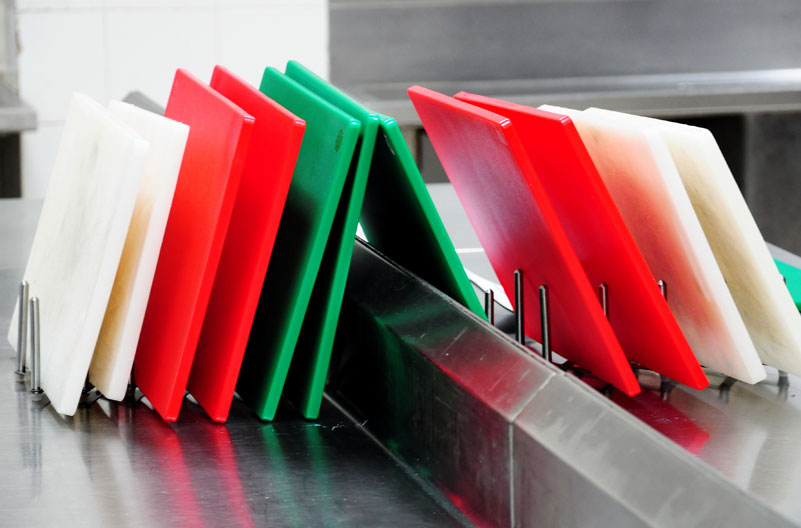
When preparing food, there should be a continued separation of high-risk, raw and ready-to-eat foods, often signified by chopping board colours. There is no existing set colour scheme for chopping boards, but having a scheme that all your staff know and follow demonstrates effort to limit cross-contamination.
If possible, it would be sensible to divide your food areas between dirty tasks, such as washing up, and clean tasks, such as plating up, to further reduce the risk.
This category also relies heavily on staff. The EHO is entitled to, and will, ask your staff about their knowledge of the food safety aspects of their roles.
It is your responsibility to ensure that they understand what is required of them from a food safety standpoint, the processes in place to prevent contamination of food, and why those processes exist.
Perhaps the most important of these areas is handwashing. If hand hygiene standards are not being met, you are likely to receive at least 10 intervention points. That would automatically prevent you from achieving a 5 star food hygiene rating. For this reason, it is important to ensure all staff who handle food know how to wash their hands properly, and actually do it, particularly after situations that could lead to contamination.
Confidence in management is the broadest of categories and overlaps. It is effectively a category which addresses the food hygiene culture you have created and maintain.
The EHO knows that a visit is just a snapshot of the day-to-day business. They will want reassurance that the processes they see are consistently followed.
Every business is required by law to have and use its own Food Safety Management System. This is a system based on HACCP principles and tailored to your business. It should reflect the types of food you prepare, the space you prepare it in and any specific challenges.
The evidence that the systems mentioned in the previous sections are being followed correctly will also be checked by your EHO. A lack of such evidence can be a significant issue.
The final element of confidence in management, and indeed in achieving a 5 star food hygiene rating, is how well the culture of food hygiene is maintained.
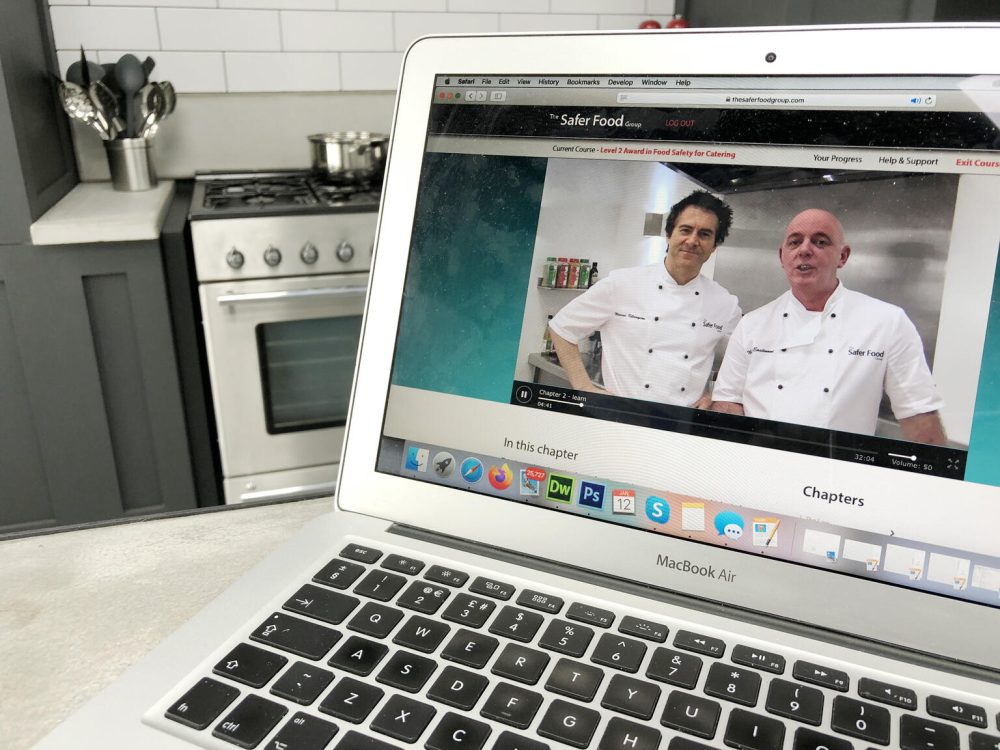
All staff handling food should be trained in food hygiene, with evidence supplied to show this. Supervisors should be particularly knowledgeable to ensure standards are maintained and processes are consistently followed - The Safer Food Group's Level 3 Food Supervisor training focusses on the skills and knowledge that leaders need to ensure their teams are operating safely.
Staff should be provided with suitable PPE for any task that may require it, and a uniform policy should be in place to limit the risks of cross-contamination. Visual cues, while not necessary, can also contribute to an overall sense of attentiveness to food hygiene.
Finally, staff should be given sufficient time to complete any set task. Rushed tasks can lead to cut corners, which reduces the efficacy of the task, limiting its usefulness.
If your score isn’t what you hoped for, you don’t have to wait for the next routine visit. Once improvements are made, you can apply for a re-inspection (re-score) with your local authority, often for a small fee.
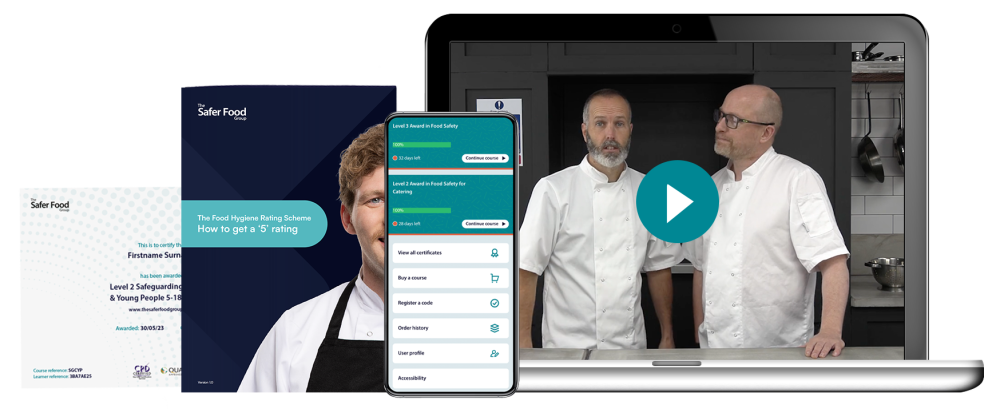
Many councils also provide support services, guidance and training to help you achieve and maintain a 5 star food hygiene rating. The Safer Food Group provides a FREE FHRS training course that supports you through a pre-audit process and helps you identify the actions required to bring your business up to speed before your inspection date.
As the EHO can come for an inspection at any time, you should be doing everything possible to ensure that, regardless of when it takes place, you are prepared.
You need effective systems in place to maintain hygiene standards, and these systems must be followed by all staff who know their roles and responsibilities.
A strong food safety culture not only helps you achieve a 5 star food hygiene rating, but also builds trust with customers, protects your business’s reputation and keeps diners safe.
For further information, take a look at our FREE course:
The Safer Food Group provide, accessible, engaging safety training for food industry professionals. For more information visit The Safer Food Group.
Join 950,000+ learners
Explore our award winning online video based training

The Safer Food Group
Unit 2, Integrity House,
Lower Lumsdale, Matlock
DE4 5EX

Back
to top
© The Safer Food Group 2026 | Privacy policy